


How to Cut Polycarbonate Sheet: The Expert Guide to Precision Cutting
Polycarbonate is the “indestructible” transparent plastic that engineers and contractors trust for everything from riot shields to greenhouse glazing. However, its toughness can be a double-edged sword when it comes to fabrication. If you use the wrong technique, you risk melting the edges or causing unsightly cracking.
In this guide, we’ll walk you through the professional methods for cutting polycarbonate sheets to ensure a clean, burr-free finish every time.
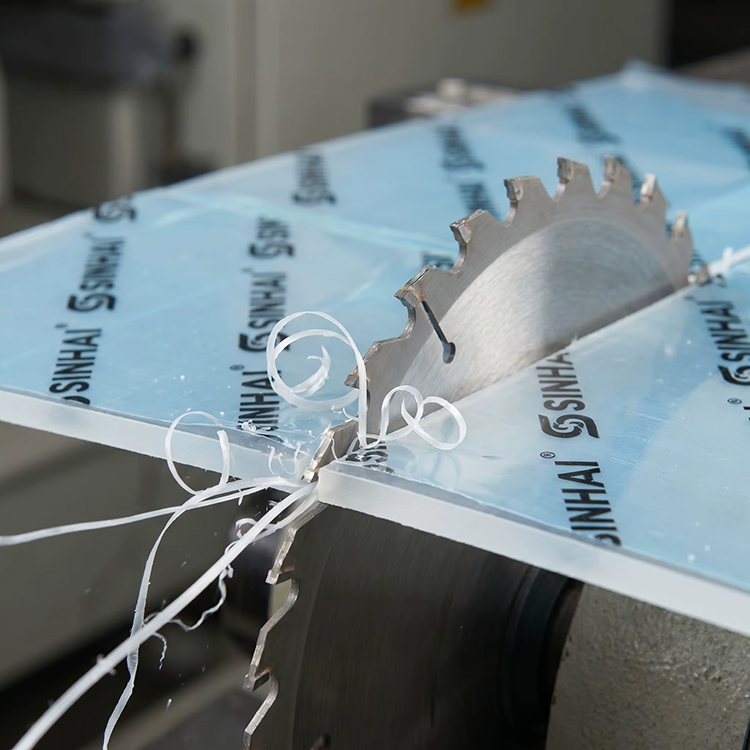
1. Choosing the Right Arsenal: Essential Tools
The tool you choose depends primarily on the thickness of the polycarbonate sheet.
- Thin Sheets (< 3mm): A heavy-duty utility knife or specialized “scoring” tool is often sufficient.
- Medium to Thick Sheets (3mm – 12mm+): Power tools are your best bet. A circular saw with a fine-tooth carbide blade or a jigsaw with a metal-cutting blade will provide the best results.
- Intricate Shapes: A jigsaw or a band saw is necessary for curves and complex profiles.
2. Preparation: The Secret to a Professional Cut
Before the blade touches the plastic, follow these three non-negotiable steps:
- Leave the Protective Film On: Polycarbonate scratches easily. Keep the polyethylene film on both sides until the very end.
- Support is Key: Ensure the sheet is supported close to the cut line to prevent vibration. Vibration is the #1 cause of edge cracking.
- The Masking Tape Hack: Apply a strip of high-quality masking tape along the cut line on top of the film. This reduces friction and provides a clearer line for marking.
3. Cutting Methods by Tool
Method A: The Score and Snap (For Thin Sheets)
Best for DIY projects and thin glazing.
- Clamp a metal straightedge along your cut line.
- Run your utility knife along the edge 5–10 times until you’ve created a deep groove (score).
- Place the sheet on the edge of a flat table with the score line exactly on the edge.
- Apply firm, even downward pressure to “snap” the sheet along the line.
Method B: Circular Saw (For Straight, Long Cuts)
Best for industrial applications and thick panels.
- Blade Selection: Use a carbide-tipped blade with at least 60–80 teeth for a 10-inch blade (fine-tooth).
- Feed Rate: Move the saw at a steady, moderate pace. If you go too slow, the friction will melt the plastic; too fast, and you might chip the edge.
- Blade Selection: Use a fine-tooth blade specifically designed for metal or hard plastics.
- Orbital Action: Turn off the orbital or “pendulum” action. You want a straight up-and-down motion to avoid excessive vibration.
- Keep it Cool: For very thick sheets, you can use a light mist of water or a specialized plastic coolant to prevent melting.
- Remove the Burrs: After cutting, use a deburring tool or fine-grit sandpaper (400-600 grit) to smooth the edges. This isn’t just for aesthetics—smooth edges are less likely to develop stress cracks over time.
- Avoid Wood Blades: Standard wood-cutting blades have teeth that are too large and aggressive, which will likely shatter the polycarbonate.
Method C: Jigsaw (For Curves and Small Cuts)
4. Pro Tips for the Perfect Finish
5. Safety First
Always wear safety goggles. Unlike acrylic, which can shatter into sharp shards, polycarbonate tends to produce small, hot plastic “chips” that can fly quite a distance during power cutting.
Conclusion
Cutting polycarbonate sheet doesn’t have to be daunting. By selecting the right tooth count on your blades and maintaining a steady feed rate, you can achieve factory-level precision in your own workshop.
Looking for high-quality, durable polycarbonate sheets for your next project? Browse our full range of clear, tinted, and multi-wall panels at [www.xhplasticsheet.com].
Company Name: Baoding Xinhai Plastic Sheet Co.,ltd
Contact Person: Sale Manager
Email: admin@cnxhpcsheet.com
Phone/Wechat/Whatsapp: +8619932587617
Country: China
Website: https://www.xhplasticsheet.com/
Post time: Jul-08-2026